
Silicone Hardness Comparison Chart (Shore A): A Manufacturer's Guide
What Is Shore A Silicone Hardness?
- Compression and sealing behavior
- Flexibility and dimensional stability
- Grip, tactile feel, and surface contact
- Long-term durability under mechanical stress
- Sealing performance under pressure or temperature cycles
Silicone hardness refers to the resistance of silicone rubber to indentation. It is measured using the Shore A scale, the industry-standard method for elastomers used in sealing, instrumentation, and industrial applications. For a primer on silicone chemistry and composition, see our Silicone 101 overview
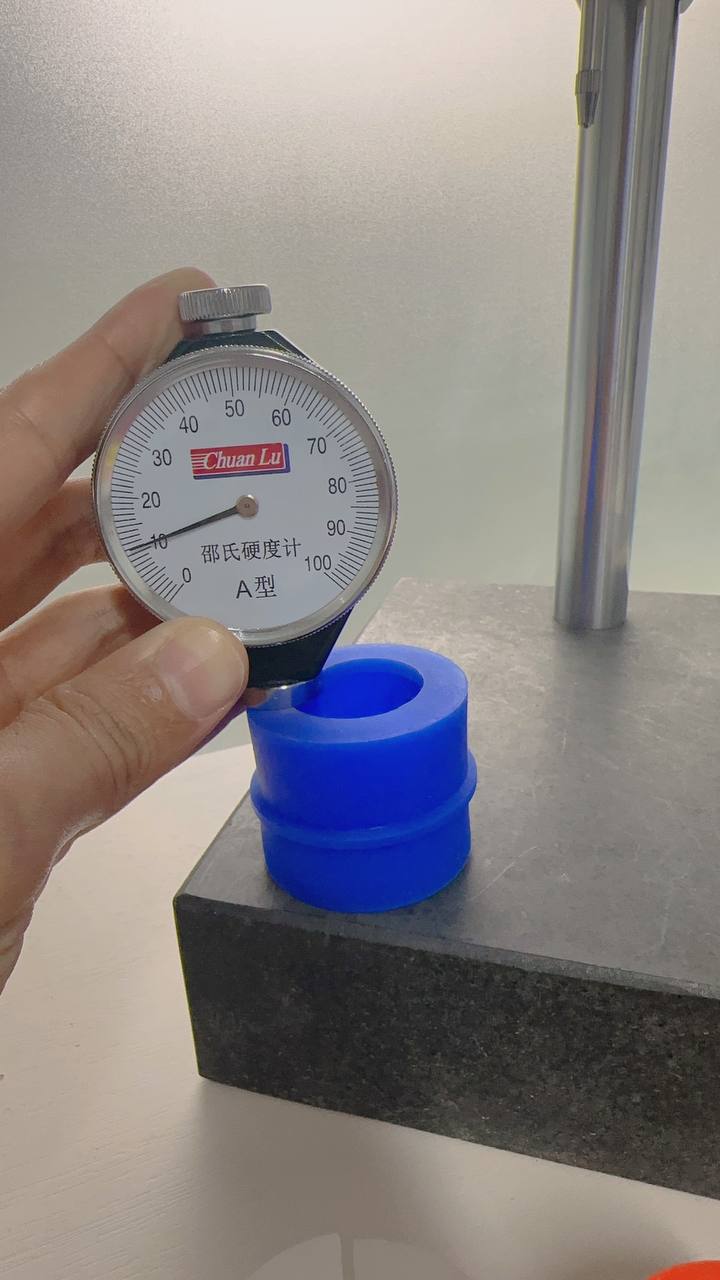
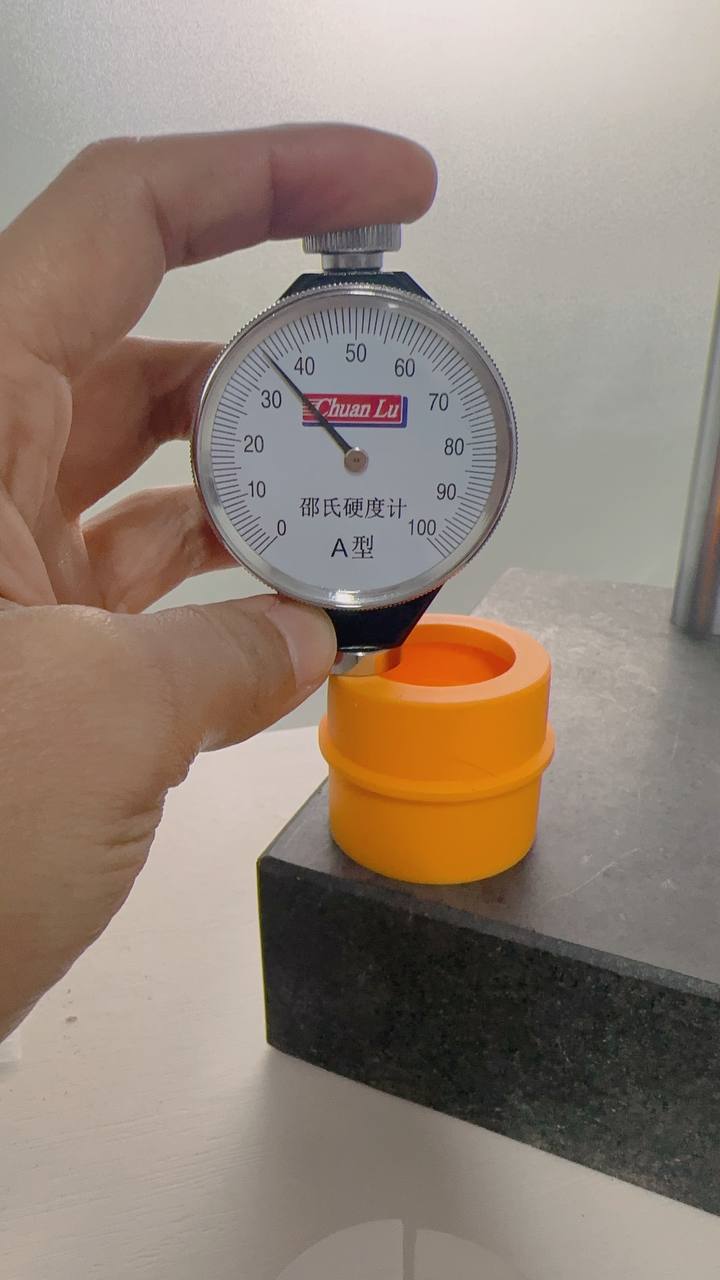
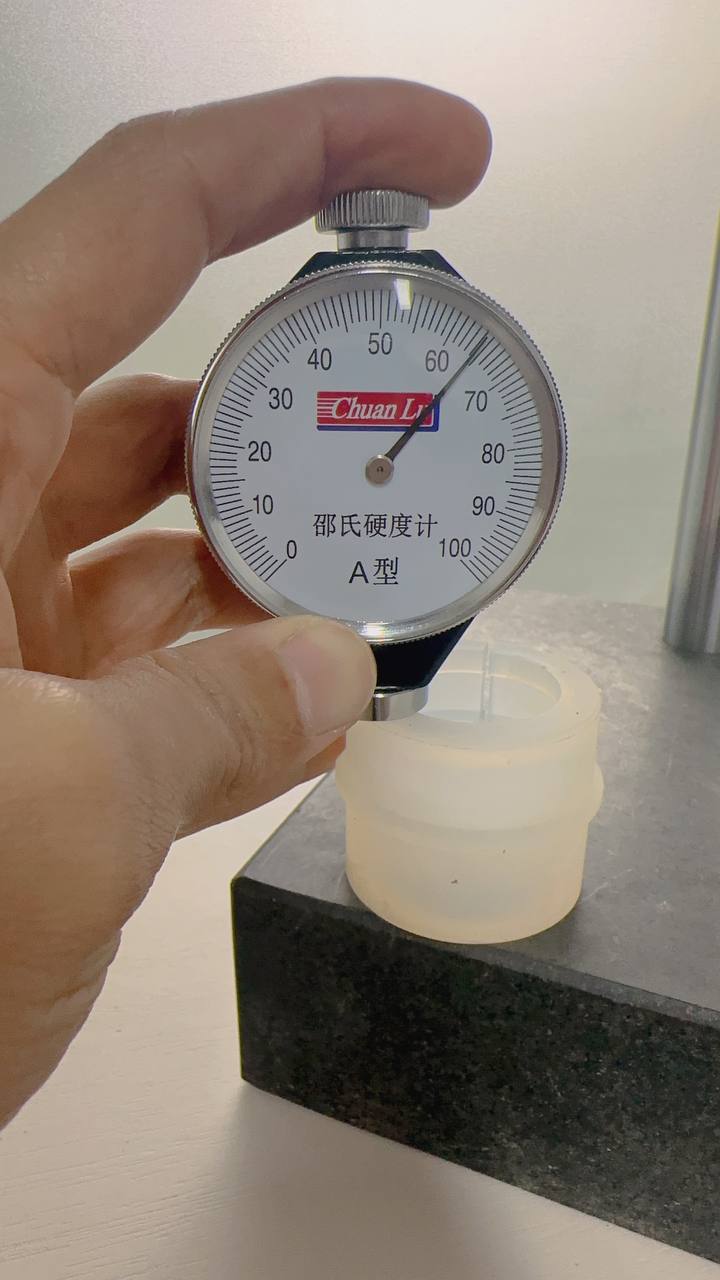
Shore A Silicone Hardness Comparison Chart
Silicone rubber ranges from 0 Shore A (gel-like, ultra-soft) to 90 Shore A (near rigid). Selecting the wrong hardness is one of the most common and costly mistakes in silicone component specification. It leads to seal failure, deformation, or premature wear in service.
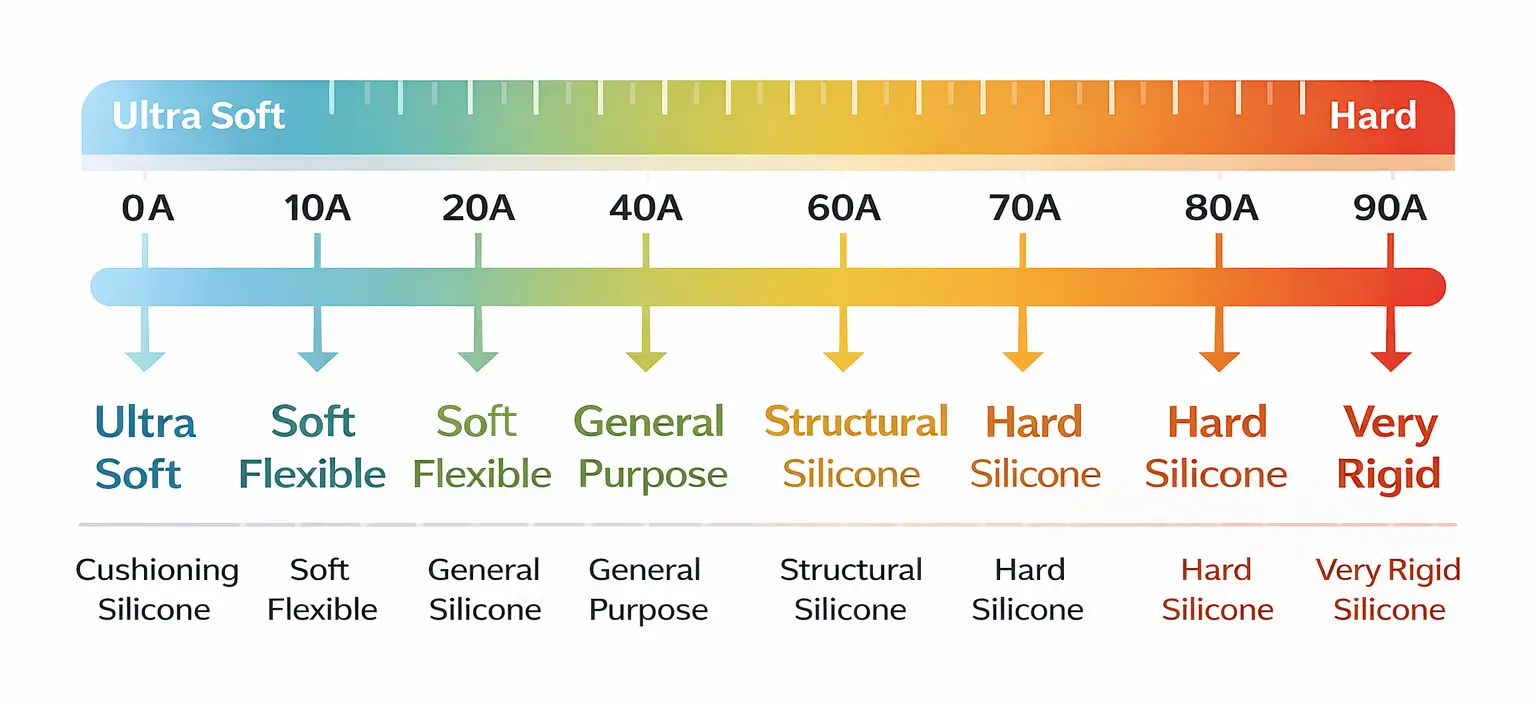
| Shore A | Feel | Real-World Reference | Typical Applications |
|---|---|---|---|
| 0A | Ultra soft, gel-like | Soft gel pad | Cushioning, vibration dampening |
| 10A | Very soft | Gel shoe insert | Soft grips, medical pads |
| 20A | Soft and flexible | Rubber band | Flexible covers, thin membranes |
| 30A | Soft but stable | Pencil eraser | Seals, gaskets, diaphragms |
| 40A | Medium soft | Tire tread | Keypads, protective cases, instrument seals |
| 50A | Balanced | Shoe sole | Kitchen molds, general-purpose seals |
| 60A | Firm rubber | Shopping cart wheel | Industrial seals, tubing |
| 70A | Hard rubber | Hard tire | Structural molded parts |
| 80A | Very rigid | Hockey puck | Mechanical components |
| 90A | Extremely rigid | Hard plastic-like rubber | High-strength structural parts |
Our manufacturing sweet spot: We specialize in custom silicone from 30A to 60A, covering the full range of sealing and general-purpose instrumentation components.
How Shore A Hardness Is Measured
Shore A hardness is tested using a durometer, a standardized instrument that presses a flat-ended indenter into the silicone surface under a defined force. The depth of penetration determines the hardness value.
- 0A = full indenter penetration (completely soft)
- 100A = no penetration at all (completely rigid)
For instrumentation and industrial applications, hardness must be consistent across a production batch. Variation of even ±5 Shore A can affect sealing compression and flow control performance in precision components.
The Chemistry Behind Shore A: How Manufacturers Control Silicone Hardness
Silicone hardness does not come from the raw material alone. It is developed through a controlled production process, and understanding this helps explain why hardness consistency is a chemistry and process problem, not just a quality inspection problem. Learn what is silicone a comprehensive overview.
The Supply Chain Behind a Shore A Value
Raw silicone gum is produced by chemical manufacturers, companies that synthesize the base polymer from silica (sand) and other compounds. As a custom silicone product manufacturer, we do not produce silicone gum. We work with it, selecting, compounding, and processing it to achieve a specific hardness and performance target for each application.
Each raw silicone gum arrives with a defined vinyl content, a chemical property that determines its hardening potential. For example, a gum with 0.04% vinyl content behaves differently under curing than one with 0.02%. The raw gum sets the ceiling. The formula we apply develops the actual hardness.
Vinyl Groups: The Hardening Mechanism
Vinyl groups are reactive sites along the silicone polymer chains, think of them as hooks. During vulcanization (curing under heat and pressure), a crosslinker bonds these hooks on adjacent chains together, forming a molecular network.
The density of that network determines Shore A hardness:
- More vinyl + more crosslinker = denser network = harder silicone (e.g. 70A–80A)
- Less vinyl + less crosslinker = looser network = softer silicone (e.g. 30A–40A)
Fillers, primarily silica, are also added to fine-tune hardness and improve mechanical properties like tear resistance. The final Shore A value is the result of the vinyl content, crosslinker ratio, filler loading, and cure conditions working together.
How We Hit a Target Hardness
We analyze the vinyl content of the incoming raw gum and calculate the compound formula needed to reach the target Shore A. This is verified by durometer measurement after a test cure before full production begins.
For intermediate hardness values, pre-compounded stocks can also be blended. For example, if a project requires 70A and we hold 60A and 80A stock, blending them in calculated proportions can achieve the target, which is useful during prototyping when speed matters.
This is why a reliable silicone manufacturer does not simply mold pre-mixed material and hope for the right result. Hardness is controlled at the compounding stage, before anything enters a mold.
Shore A Hardness Selection Guide by Application
Sealing Applications: 30A – 50A
For silicone seals, gaskets, O-rings, and diaphragms used in flow control, pressure sensing, and process instrumentation, the optimal range is 30A to 50A.
Why this range works:
- Soft enough to compress and conform to mating surfaces
- Firm enough to maintain sealing pressure across temperature cycles
- Resilient enough to recover shape after repeated compression
This is the range we produce most frequently for instrumentation clients requiring precision sealing in chemical, gas, and fluid measurement environments.
If silicone is too soft (below 20A), it deforms excessively under load and may extrude from the seal groove. If too hard (above 60A), it cannot compress sufficiently to form a reliable seal, especially on non-flat or machined metal surfaces.
General-Purpose and Keypads: 40A – 60A
For components where both flexibility and structural form are required, such as silicone keypads, protective covers, and cable management parts, 40A to 60A provides the right balance.
This range is common in:
- Industrial control panel keypads
- Silicone overmolded grips
- Instrument panel covers and protective boots
Mechanical and Structural Parts: 60A – 80A
For parts that must hold dimensional shape under sustained mechanical stress, such as structural housings, supports, or load-bearing components, harder silicone is preferred.
At 60A–80A, silicone provides:
- Better dimensional stability under compression load
- Higher resistance to surface wear
- Greater stiffness for structural integrity
Note: Silicone above 70A has reduced elasticity. For components exposed to repeated bending or compression cycling, this range may fatigue over time. Testing under real operating conditions is strongly recommended before finalizing.
Shore A Hardness: Application Reference Table
| Application | Recommended Shore A |
|---|---|
| O-rings and static seals | 30A – 50A |
| Dynamic seals and diaphragms | 40A – 60A |
| Gaskets (flat face sealing) | 30A – 50A |
| Flow control diaphragms | 40A – 55A |
| Instrument keypads | 40A – 60A |
| Protective overmolds | 40A – 60A |
| Industrial tubing | 50A – 70A |
| Structural molded parts | 60A – 80A |
| Flexible covers and membranes | 20A – 40A |
Shore A vs Compression Resistance
| Shore A | Compression Resistance | Sealing Suitability |
|---|---|---|
| 10A | Very low | Poor (too soft) |
| 30A | Low | Good for light-duty seals |
| 40A–50A | Medium | Excellent for most sealing |
| 60A | Medium-high | Good for dynamic/industrial seals |
| 70A | High | Structural use only |
| 90A | Very high | Not suitable for sealing |
Hardness Behavior in Instrumentation Environments
Instrumentation silicone components operate in demanding conditions, including chemical exposure, wide temperature swings, and pressure cycling. Hardness selection must account for more than just static feel.
Temperature effects: Silicone becomes temporarily stiffer at low temperatures and slightly softer at elevated temperatures. For components used in process instrumentation across a wide temperature range, a 40A–50A baseline typically provides the most consistent sealing performance across operating conditions. Learn how silicone can handle high heat.
Chemical exposure: In aggressive chemical environments (acids, solvents, oils), silicone can swell slightly, effectively reducing functional hardness. Specifying a slightly harder baseline, for example 50A instead of 40A, can compensate for this in harsh media applications.
Compression set: Over time, silicone under sustained compression loses some recovery. Lower hardness silicone (below 30A) is more vulnerable to permanent compression set. For long-service-life seals in flow meters, pressure transmitters, or analyzers, 40A–60A provides better long-term recovery.
Shore A vs Shore 00: When Does Shore A Not Apply?
For extremely soft elastomers, softer than 10 Shore A, the Shore 00 scale is sometimes used. This is less common in industrial silicone but relevant for cushioning and ultra-soft gel applications.
| Shore 00 | Approx Shore A Equivalent |
|---|---|
| 20 | ~5A |
| 40 | ~10A |
| 60 | ~20A |
| 80 | ~30A |
For instrumentation and industrial silicone, Shore A is the relevant scale in virtually all standard applications.
How We Select Hardness for Custom Silicone Components
As a custom silicone manufacturer working with instrumentation OEMs and industrial clients, we typically follow this process when specifying hardness for a new component:
- Understand the sealing environment: static or dynamic? What media? What pressure and temperature range?
- Review mating surface geometry: harder surfaces (machined metal) generally require softer silicone to achieve consistent contact sealing.
- Identify mechanical load requirements: parts under sustained compression need better compression set resistance.
- Recommend a starting hardness: typically 40A or 50A for most sealing applications, adjusted based on the above factors.
- Prototype and test: we strongly recommend testing at a minimum of two hardness levels before finalizing the production spec.
Common prototyping sets we supply: 30A, 40A, and 50A samples for direct comparison in the customer's actual assembly.
Prototyping Tip: Test Before You Finalize
Material hardness often behaves differently in a real assembly than expected from specification alone. A seal that appears correct on paper may be too hard to compress fully in a narrow groove, or too soft to hold position during installation.
Before committing to production volumes, we recommend:
- Testing at two adjacent hardness levels (e.g., 40A and 50A)
- Evaluating under actual compression load and media conditions
- Checking for compression set after a defined soak period
This step consistently reduces the risk of field failures and redesign costs, particularly for precision instrumentation seals where replacement is costly and downtime is not acceptable. Those sample sets come from silicone rapid prototyping, CNC-milled in stainless soft tooling, and the same tool runs first production with no retooling.
Video Demonstration
To see how different Shore A hardness levels actually behave, including compression, bending, and surface contact, watch this side-by-side comparison using real silicone samples:
Seeing the physical difference between 30A, 50A, and 70A silicone makes the selection decision significantly clearer than specification sheets alone.
Need a Custom Shore A Specification?
We mold custom silicone parts from Shore A 10 to 80, verified per ASTM D2240 on every lot. Most of that work is for instrumentation OEMs, industrial equipment manufacturers, and product companies.
If you have a sealing, diaphragm, gasket, or molded silicone requirement and need guidance on hardness selection, send your application details to our engineering team for a free DFM review.
Choosing a Manufacturing Method
The right method depends on the part.
- Testing two hardness levels before production: silicone prototyping, in the production material and process.
- Seals, gaskets, diaphragms, and most molded parts: low-volume to full-production compression molding, Shore A 10 to 80.
- Silicone bonded to plastic or metal: silicone overmolding.
- Cases for electronics and handheld devices: custom silicone cases.
- Keypads: custom silicone keypads, 40A to 60A typical.
- Sheet in a specified thickness and durometer: custom silicone sheeting, made to your size.
- Not sure which applies: design and engineering. Send a drawing or describe the sealing problem and we specify the method and the hardness together.
Every method we run is listed under Manufacturing Methods.
Frequently Asked Questions: Shore A Silicone Hardness
Does silicone hardness change over time or with temperature?
Silicone hardness does not permanently change under normal operating conditions, but it is temporarily affected by temperature. At low temperatures, silicone becomes stiffer and registers a higher durometer reading. At elevated temperatures, it softens slightly and reads lower. These changes are reversible, once returned to room temperature, the Shore A value returns to its specified range.
Long-term aging under sustained compression can cause compression set, which reduces the material's ability to recover its original shape. This is not a hardness change, but it affects sealing performance in the same way.
What is the tolerance on a specified Shore A value?
Our standard production tolerance is ±5 Shore A. This accounts for natural variation in raw material vinyl content between batches and minor process variables during curing.
An important detail: crosslinker loading is intentionally set at 90–95% of the theoretical maximum based on vinyl content, not 100%. Fully saturating all available vinyl sites would leave no molecular flexibility in the cured network, resulting in a brittle compound with poor elastic recovery. The 5–10% headroom is a deliberate formulation decision that preserves the elastic behavior silicone is known for.
Does silicone color affect Shore A hardness?
No. Pigment and colorant additions do not affect Shore A hardness. Color in silicone is achieved through masterbatch pigments that are chemically inert and do not interfere with the crosslinking network. A red 50A silicone and a blue 50A silicone made from the same compound will measure identically on a durometer.
Hardness is determined entirely by vinyl content, crosslinker ratio, and filler loading not by color.
What is the difference between Shore A silicone and EPDM or NBR rubber at the same hardness?
Shore A measures resistance to indentation, so a 50A silicone and a 50A EPDM will feel similar to the touch. However, hardness is the only property they share at that rating.
- Silicone outperforms EPDM and NBR in temperature range (typically -60°C to 230°C) and has superior resistance to UV, ozone, and weathering.
- NBR outperforms silicone in oil and fuel resistance.
- EPDM is preferred for water and steam applications but has a narrower temperature range than silicone.
When specifying a material for instrumentation or industrial sealing, Shore A hardness is only one factor. Media compatibility, temperature range, and compression set resistance must also be matched to the application. Rubber material selection guide.
Can the same silicone part have different hardness in different areas?
Yes, through a process called dual-hardness or multi-durometer molding. Two silicone compounds of different Shore A values are co-molded in a single tool, bonding together during vulcanization. A common example is a sealing component with a soft 30A sealing lip and a firmer 60A structural body.
This eliminates the need for assembly of separate parts and produces a single component with optimized hardness where each area needs it. This is a specialized capability that requires precise tooling and compound compatibility testing.
Explore additional technical resources
- Silicone 101: Chemistry and Composition
- Material Library: 17 Silicone Grades and Their Uses
- Compare Silicone and Plastic by Breaking Myths and Knowing the Facts
- Discover the Pros and Cons of Antibacterial Silicone and When to Use It
- Learn How Silicone Stands Up to Heat and Holds Its Shape
- See How We Make Silicone Clean, Pure, and Free of Dust
- Rubber Material Selection Guide: 32 Compounds by Requirement
- Transparent Silicone Parts: Achieving Balance
- MOQ Explained: What It Means for Your Quote
- Design Guide: From Durometer to DFM