
Rubber-to-Metal Bonded Diaphragms: Custom Silicone Manufacturing
Dabojin has manufactured metal-bonded rubber diaphragms from its facility in Dongguan, China since 2005. Our primary elastomer is silicone (VMQ), and we work with FKM, EPDM, HNBR, and fluorosilicone depending on media and temperature requirements.
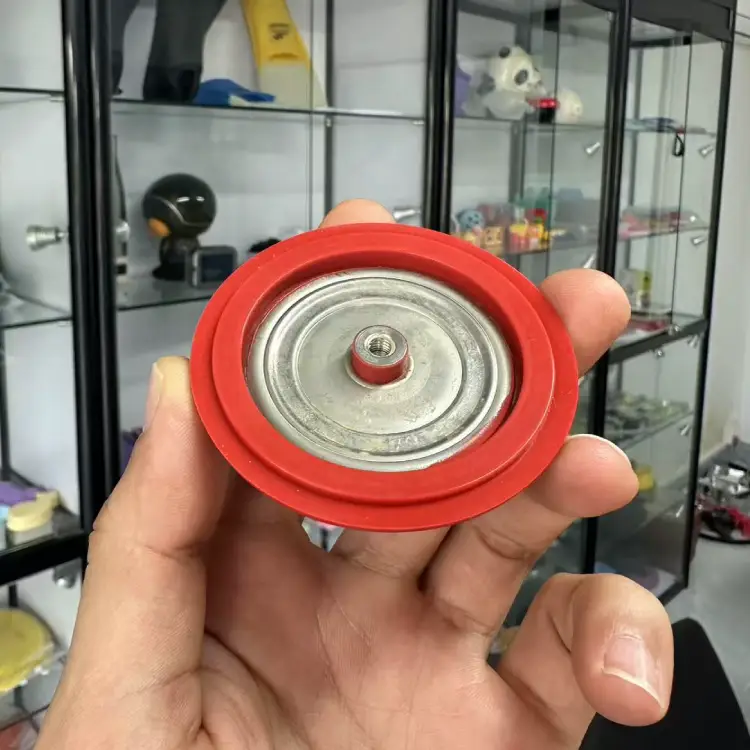
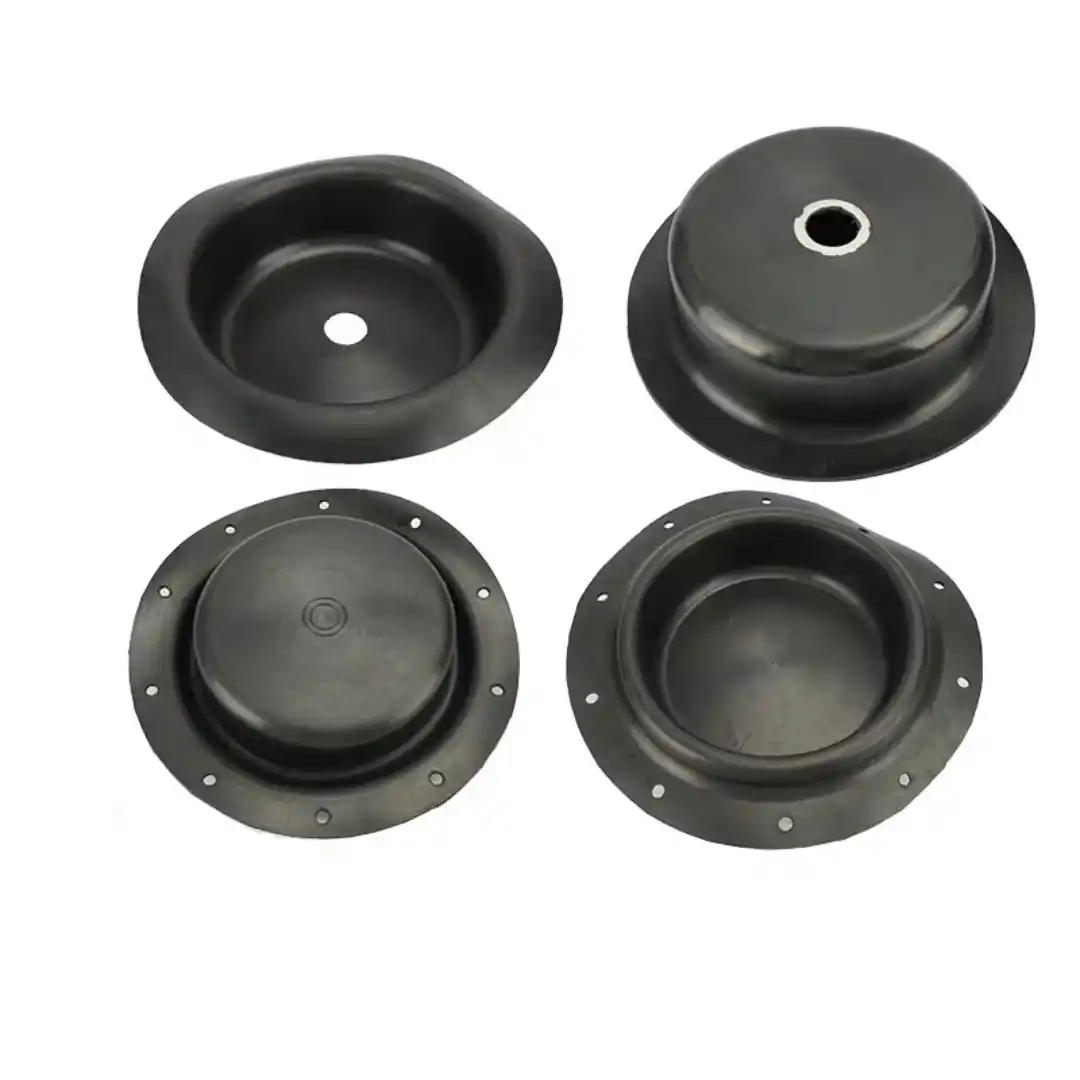
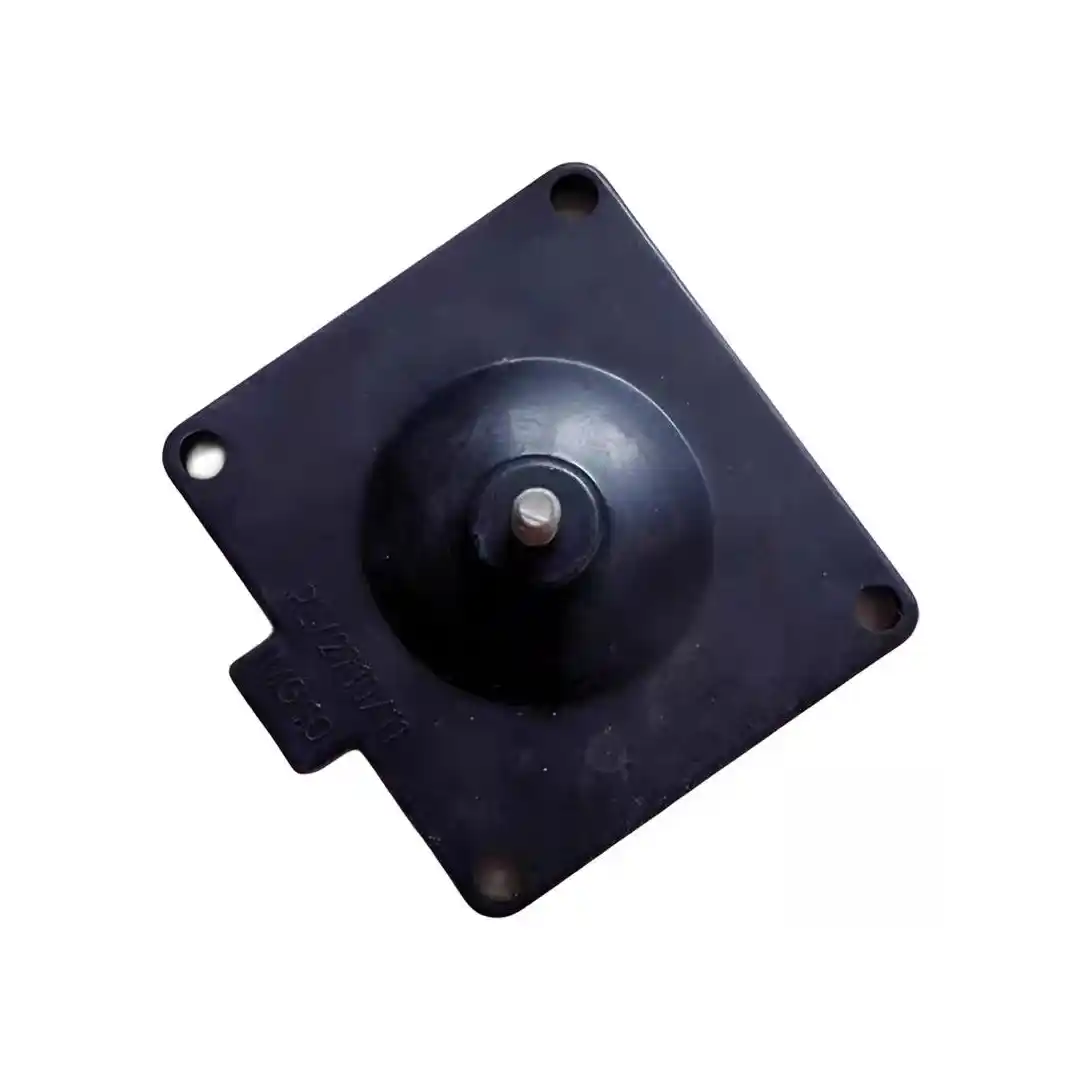
We manufacture custom rubber-to-metal diaphragms for sealing, fluid isolation, and pressure control applications. Each part bonds the flexibility of a rubber or silicone elastomer permanently to a metal insert producing a single integrated component that holds under cyclic pressure, chemical exposure, and millions of actuation cycles.
Manufacturing Specifications at a Glance
The table below covers our standard production parameters. All specifications can be adjusted for your project. Share your drawing or requirements and we will confirm what is achievable.
| Parameter | Specification | Notes |
|---|---|---|
| Typical dimensional tolerance | ±0.2 mm | Special surfaces tighter on request |
| Silicone hardness range | Shore A 20–90 | Specified per application |
| Mold cycle time (per part) | ~2 minutes | Compression overmolding |
| CNC mold lead time | ~15 working days | From approved drawing |
| Bond test method | Destructive pull test | Every new mold qualification |
| Bond failure mode | Silicone tears before bond separates | Confirms bond > silicone strength |
| Metal insert materials | Stainless steel (primary), most metals, engineering plastics | Customer-supplied inserts accepted |
| Standard post-cure | Not required (in-mold bond) | Post-cure available for low compression set |
| Medical / food grade | USP Class VI, FDA 21 CFR 177.2600 available | Specify at enquiry stage |
Bond strength note: In our destructive pull-test qualification process, the silicone elastomer tears before the rubber-to-metal bond separates. This confirms the bond is stronger than the bulk material the only meaningful benchmark for diaphragm reliability.
How the Rubber-to-Metal Bond Is Made
The bond is the product. Everything else geometry, hardness, media resistance is secondary if the bond is not permanent.
Our overmolding process
We use compression overmolding: the rubber or silicone compound is formed directly onto the metal insert inside a heated mold. During the mold cycle, heat and pressure activate the bonding agent, creating a chemical bond at the interface between elastomer and metal. The result is a single-piece component no adhesive assembly, no secondary fastening, no shifting under load.
- Surface preparation: Each insert is cleaned and treated according to its alloy. Sandblasting is used only where the surface geometry requires mechanical key not as a standard step.
- Bonding agent activation: The adhesive system activates in-mold during the compression cycle, eliminating the separate priming step required by older bonding methods. This reduces process steps and improves repeatability.
- Cycle time: Approximately 2 minutes per part once tooling is qualified.
- Mold qualification: Every new mold undergoes destructive pull testing before entering production. We confirm bond failure mode (elastomer tears, not bond separates) before shipping any parts.
Video Demonstration
To see our silicone-to-metal diaphragm bonding process in action, watch this detailed side-by-side demonstration using real production samples:
This video showcases our process: silicone is compression overmolded directly onto metal inserts in a single mold cycle. Key highlights include ±0.2 mm tolerance, 2-minute production cycle, and 15-day mold lead time. We support USP Class VI compliance, custom sizes, multiple elastomers (silicone, FKM, EPDM, HNBR), and custom metal inserts to your drawing.
Two bonding mechanisms: chemical and mechanical
Depending on insert geometry and application loads, we use one or both of the following approaches:
| Method | How It Works | When We Use It | Bond Strength |
|---|---|---|---|
| Chemical adhesive bonding | Bonding agent applied to metal insert activates during mold heat cycle. No separate priming step required. | Primary method for all standard diaphragm runs. Fastest and most consistent. | Silicone tears before bond exceeds material strength |
| Mechanical encapsulation | Metal insert geometry (holes, undercuts, projections) locks into elastomer during molding. | Used when insert design supports it, or as a secondary reinforcement alongside chemical bonding. | High load distributed across insert geometry |
Elastomer Options for Metal-Bonded Diaphragms
The rubber compound governs how the diaphragm performs in service. We manufacture metal-bonded rubber diaphragm seals in the elastomers below. Our full compound library covers 32 materials the table highlights the grades most relevant to diaphragm applications.
| Elastomer | ASTM Code | Temp Range | Key Strength | Typical Diaphragm Use |
|---|---|---|---|---|
| Silicone (VMQ) | FC | –60°C to +200°C | Flexibility, medical/food grade, wide temperature | Medical devices, food processing, general industrial |
| Fluorosilicone (FVMQ) | FE | –60°C to +175°C | Silicone + oil/fuel resistance | Aerospace fuel systems, automotive underhood |
| FKM (Viton®) | HK | –40°C to +250°C | Chemical and heat resistance | Chemical dosing pumps, high-temp regulators |
| EPDM | CA | –50°C to +150°C | Steam, hot water, ozone resistance | Water treatment, HVAC, outdoor applications |
| Nitrile (NBR) | BF/BG | –40°C to +120°C | Oil and hydraulic fluid resistance | Pneumatic controls, hydraulic actuators |
| HNBR | CH | –40°C to +150°C | NBR + improved heat/chemical resistance | Automotive, oil field equipment |
Compound selection is driven by: (1) media the diaphragm contacts, (2) operating temperature range, (3) required Shore A hardness for the stroke and pressure spec, (4) any compliance certification needed. If you are not sure, share these four parameters and we will recommend the compound.
For detailed data on each material temperature ranges, chemical resistance ratings, and ASTM codes see our Rubber Material Selection Guide (32 compounds).
For Shore A hardness selection and how it affects diaphragm stroke and stiffness, see our Silicone Shore Hardness Chart.
Diaphragm Profile Selection
The cross-sectional profile of a diaphragm determines its stroke length, stress distribution, and service life under cyclic loading. We manufacture all four standard profiles; the correct choice depends on your travel requirement and assembly envelope.
| Profile | Stroke Capability | Stress Distribution | Best For |
|---|---|---|---|
| Flat | Short | High at edges under load | Compact actuators, pressure sensors |
| Dished (dome) | Medium | More uniform than flat | Regulators, relief valves |
| Rolling (piston-type) | Long | Low stress moves with roll | Pneumatic cylinders, long-travel controls |
| Convoluted | Very long | Distributed across convolutions | Large-stroke actuators, pumps |
Rolling and convoluted profiles are specified for long-travel applications the stress moves with the roll rather than concentrating at the bead, which extends fatigue life significantly. Flat and dished profiles are more compact and suit short-stroke sensors and regulators where space is constrained.
When bonded to a metal insert, all four profiles achieve better dimensional stability and pressure control than unbonded rubber diaphragms. The metal provides a fixed mounting reference and prevents bead pullout under pressure spikes.
Metal Insert Design and Compatibility
Insert materials we work with
- Stainless steel (303, 304, 316) our most common insert material. Excellent corrosion resistance, bonds well with silicone and FKM compounds.
- Carbon steel and mild steel used where cost is a priority and corrosion protection is handled by coating or the mold compound itself.
- Aluminium alloys lower mass applications, typically pneumatic actuators and instrumentation.
- Brass natural cohesive bond possible with certain sulfur-cured compounds, used in precision regulators.
- Engineering plastics (PEEK, nylon, PTFE-filled) we bond silicone to high-temperature plastics where metal inserts would add unnecessary weight or create galvanic risk.
- Customer-supplied inserts we adjust mold parameters to accommodate metal parts you provide. Dimensional confirmation required before tooling.
Insert geometry guidelines
Sharp internal corners and projections extending deeply into the elastomer create stress concentrations that reduce fatigue life. We recommend:
- Minimum internal corner radius of 0.5 mm at the rubber-metal interface
- Avoiding sharp projections longer than 3× their width in the bonded zone
- Draft angles of at least 1° on surfaces perpendicular to mold pull direction
- Communicating any tight-tolerance mating surfaces early we pay special attention to sealing and mounting faces during mold design
Industry Applications for Rubber-to-Metal Diaphragm Seals
Metal-bonded rubber diaphragms are used wherever an elastomeric membrane must maintain a fixed mounting position under pressure, vibration, or repeated cycling. The metal insert eliminates the need for clamp flanges or separate fastening the diaphragm arrives ready to install.
| Industry | Device / Equipment | Diaphragm Role | Typical Elastomer |
|---|---|---|---|
| Medical instrumentation | Infusion pumps, ventilators, pressure sensors | Fluid isolation, precise actuation | Silicone (USP Class VI) |
| Industrial fluid handling | Chemical dosing pumps, back-pressure regulators | Sealing against aggressive media | FKM, EPDM |
| Automotive & rail | Transmission controls, brake actuators, rail-transit seals | Dynamic sealing under cyclic pressure | HNBR, FVMQ |
| Aerospace | Fuel system regulators, pneumatic actuators | Fuel-resistant sealing across wide temperature range | FVMQ, FKM |
| Water treatment & HVAC | Pressure regulators, control valves, flow meters | Steam and hot-water resistance | EPDM |
| Food & beverage processing | Dosing valves, CIP system seals | FDA-compliant fluid contact surfaces | Silicone (FDA grade) |
| Laboratory & analytical | Micro-pumps, gas sampling, chromatography | Low extractables, high purity | Platinum-cured silicone |
Application notes: If your application involves steam, concentrated acids, or continuous vacuum, specify the exact media and temperature profile. Some elastomer-insert combinations that work well in static seals behave differently under dynamic cycling we confirm this during mold qualification.
Quality Assurance and Documentation
Production inspection
- Destructive pull test (mold qualification): Every new mold is qualified by pulling bonded samples to failure. We confirm the elastomer tears before the bond separates and document the failure load before releasing the tool for production.
- Visual bond inspection: 100% visual inspection of every production part for bond coverage, flash, and surface defects at the bonded interface.
- Dimensional check: Critical dimensions mounting face flatness, bore diameter, overall height checked against drawing tolerances. Typical capability at ±0.2 mm.
- Shore A hardness verification: Batch samples tested against the specified compound hardness ±5 Shore A.
Documentation package (standard)
- Material Safety Data Sheet (MSDS) for the silicone or rubber compound
- Batch Inspection Report with dimensional and visual check results
- Material certificate with supplier batch traceability (Elkem, Dow, DuPont, or qualified domestic partner)
Compliance certifications (on request)
- USP Class VI for medical-contact and pharmaceutical applications
- FDA 21 CFR 177.2600 for food-contact applications
- ISO 10993 biocompatibility for medical device applications
- RoHS restriction of hazardous substances
- SVHC / REACH chemical substance declarations
Certification requirements should be confirmed at the enquiry stage. Some compliance testing requires accredited external laboratory time and will be quoted separately.
From Your Drawing to Production Parts
The more detail you share upfront, the faster we can confirm feasibility and quote accurately. Ideal inputs:
What to send us
2D drawing or 3D CAD file: With all critical dimensions, tolerances, and surface finish requirements marked.
- Metal insert specification: Material, surface treatment, and whether you will supply inserts or we will source them.
- Application details: Media in contact with the diaphragm, operating temperature range, pressure range, and cycle rate.
- Compliance requirements: Any certifications the finished part must meet.
Our pre-production sequence
Drawing review: We check for moldability, insert geometry risks, and tolerance achievability within our standard process.
- Material confirmation: We recommend the compound for your media, temperature, and compliance requirements, or validate your specified material.
- Mold design and CNC machining: Approximately 15 working days from drawing approval to completed tooling.
- Mold qualification: First-article inspection, destructive pull test, dimensional report. Approval required before production begins.
- Production and inspection: Standard cycle time approximately 2 minutes per part. Inspection and documentation before shipment.
Additional notes
No minimum order quantity (MOQ) is enforced for custom tooled parts. We work with development quantities through full production runs.
- Prototype quantities can sometimes be accommodated from existing tooling if geometry allows.
Technical FAQs
Can the bond withstand steam or high-pressure steam cycles?
It depends on the elastomer, not the bond. The rubber-to-metal bond itself is not the limiting factor the elastomer's steam resistance is. FEPM (AFLAS) and specific FKM grades handle steam well. Standard silicone and NBR do not. Tell us your steam temperature and pressure and we will specify the right compound.
What is the difference between a rubber-to-metal bonded diaphragm and a fabric-reinforced diaphragm?
A metal-bonded diaphragm integrates structural rigidity through a rigid metal insert, which provides a fixed mounting reference and eliminates the need for external clamping hardware. A fabric-reinforced diaphragm uses woven fabric embedded in the elastomer to increase burst strength and dimensional stability without a metal component useful for large-bore diaphragms where a metal insert would be heavy or expensive. We manufacture metal-bonded types; if your application requires fabric reinforcement, we will advise at the enquiry stage.
Can you bond silicone to a metal insert I provide?
Yes. We accept customer-supplied inserts. We adjust mold parameters and bonding agent selection to match your insert material. We require dimensional confirmation of the supplied insert before tooling design begins. If your inserts have tight tolerances or unusual surface treatments, share that information early.
What Shore A hardness should I specify?
Hardness controls the stiffness of the diaphragm how much force is required to deflect it a given distance. Softer grades (Shore A 20–40) are used for low-pressure, high-sensitivity applications like medical sensors. Harder grades (Shore A 60–90) suit higher-pressure actuators and pumps. Our Shore A Hardness Chart covers this in detail with application guidance.
Do you supply standard sizes or only custom parts?
We focus on custom tooled parts designed to your drawing. Standard-size diaphragms are available in some geometries contact us with your diameter and stroke requirement and we will check against existing tooling before quoting new mold costs.
How long does the bond last in service?
Our bond qualification confirms the bond outlasts the elastomer under destructive pull test, the elastomer tears before the bond separates. In service, fatigue life depends on the elastomer compound, cycle rate, and deflection amplitude. Silicone diaphragms in medical pump applications routinely exceed 10 million cycles at design deflection. For high-cycle applications, share your cycle rate and we will recommend the compound and hardness with the best fatigue resistance.
Related Technical Resources
These resources support diaphragm material selection and compound specification:
- Rubber Material Selection Guide 32 compounds: Full chemical resistance, temperature range, and ASTM data for FKM, EPDM, NBR, HNBR, silicone, and 27 other elastomers. Use this to shortlist compounds for your media and temperature requirements.
- Silicone Shore A Hardness Chart: Detailed guidance on selecting hardness for diaphragm stroke, stiffness, and pressure requirements.
- 17 Silicone Grades and Their Uses: Covers the specific silicone formulations we use, including medical-grade, food-grade, and high-temperature variants.
- Industrial Silicone Parts Overview: How the diaphragm fits within our broader industrial sealing and enclosure product range.
Start Your Diaphragm Project
Send us your drawing and the following:
- Metal insert material and whether you will supply inserts
- Elastomer preference or media / temperature requirements if you need a recommendation
- Operating pressure range and cycle rate
- Quantity development sample through full production
- Any compliance certifications required
We will review your drawing, confirm material and tolerance feasibility, and provide a quote. Typical response time for standard enquiries is 1–2 business days.
Industrial & Technical Parts
- Industrial Silicone Parts
- Industrial Silicone Enclosures for Harsh Environments
- Silicone Industrial Equipment Manufactured for Various Industries
- Custom Silicone Parts with PEEK, PTFE, and Carbon Reinforcement
- Custom Large Rubber Flanges (2100×1200×750mm)
- Silicone Grommets: Reliable Solutions for Every Application
- Custom Silicone Solutions for Marine Applications